Work-Life Integration in the Hybrid Workplace: Challenges for Women Professionals in IT
Work-Life Integration in the Hybrid Workplace: Challenges for Women Professionals in IT
Introduction
The workplace has undergone a profound transformation over the past few years. Hybrid work, once introduced as a temporary response to global disruptions, has evolved into a long-term organizational strategy across the Information Technology (IT) sector. Today, many organizations offer employees the flexibility to work both remotely and from the office, creating new opportunities for collaboration, innovation, and productivity.
While hybrid work has delivered numerous benefits, it has also blurred the boundaries between professional and personal life. For women professionals in the IT industry, these changes present unique opportunities alongside significant challenges. Managing professional responsibilities, family commitments, caregiving roles, career advancement, and personal well-being within a hybrid work environment requires thoughtful organizational support and effective leadership.
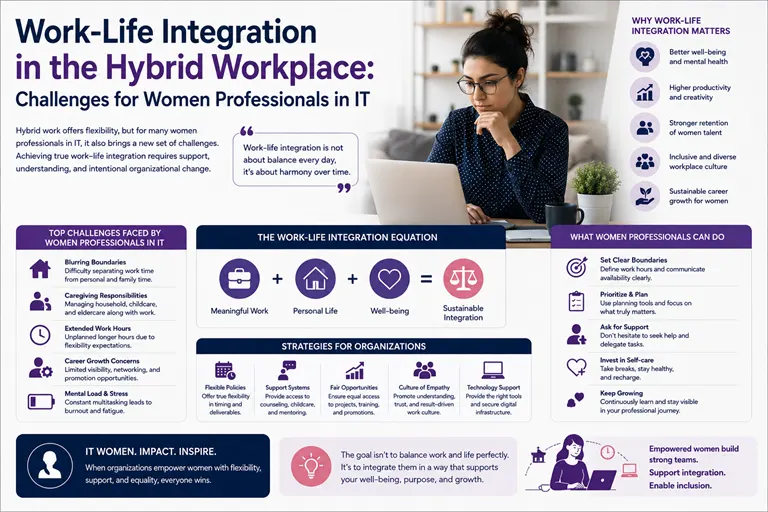
In 2026, organizations are increasingly recognizing that work-life integration extends beyond the traditional concept of work-life balance. Rather than treating work and personal life as competing priorities, work-life integration focuses on creating flexible systems that allow employees to manage both successfully while maintaining productivity and well-being.
This article examines the concept of work-life integration, explores the specific challenges faced by women professionals in the IT sector, discusses organizational strategies that support inclusive workplaces, and identifies future research opportunities in this rapidly evolving field.
Understanding Work-Life Integration
Work-life integration is a flexible approach that enables employees to coordinate professional and personal responsibilities throughout the day rather than separating them into rigid schedules.
Unlike the traditional work-life balance model, which assumes a clear division between work and personal life, work-life integration recognizes that modern employees often transition between professional and personal responsibilities multiple times during the day.
Examples include:
- Attending virtual meetings while working from home.
- Managing childcare alongside flexible work schedules.
- Participating in online learning during working hours.
- Completing work during individually productive periods.
- Coordinating caregiving responsibilities without sacrificing career growth.
This integrated approach has become increasingly relevant in digitally connected workplaces.
Evolution of the Hybrid Workplace
Hybrid work combines remote work with in-office collaboration, allowing employees greater flexibility while maintaining organizational connectivity.
Many IT organizations now adopt hybrid models because they offer:
- Increased operational flexibility
- Reduced commuting time
- Access to global talent
- Improved employee satisfaction
- Business continuity
- Better technology utilization
However, flexibility alone does not automatically improve employee well-being. Organizations must also develop policies that address equity, inclusion, and workload management.
Why Women Professionals Face Unique Challenges
Women continue to play critical roles in software development, data analytics, cybersecurity, artificial intelligence, cloud computing, project management, and digital transformation.
Despite increasing participation, many women experience additional responsibilities beyond their professional roles.
Common challenges include:
- Household responsibilities
- Childcare
- Elder care
- Career interruptions
- Workplace bias
- Unequal leadership opportunities
- Digital fatigue
- Mental health pressures
Hybrid work offers flexibility but can also intensify these challenges if organizational support is insufficient.
Major Challenges of Work-Life Integration
Blurred Boundaries Between Work and Personal Life
Working from home often eliminates physical separation between professional and personal responsibilities.
Many employees experience:
- Extended working hours
- Difficulty disconnecting
- Constant digital availability
- Increased stress
Without clear boundaries, long-term productivity and well-being may decline.
Digital Fatigue
Continuous virtual meetings, online collaboration, and prolonged screen time contribute to digital fatigue.
Symptoms may include:
- Reduced concentration
- Eye strain
- Emotional exhaustion
- Lower creativity
- Decision fatigue
Organizations should encourage healthy digital work practices and reasonable meeting schedules.
Career Visibility
Women working remotely may worry about reduced visibility compared with colleagues who spend more time in the office.
Limited informal interactions can affect:
- Networking
- Mentorship
- Promotion opportunities
- Leadership development
Organizations should ensure performance evaluations focus on outcomes rather than physical presence.
Managing Multiple Roles
Many women simultaneously manage professional responsibilities alongside caregiving and household duties.
The overlapping nature of hybrid work may increase psychological pressure, making organizational flexibility particularly important.
Mental Health and Well-being
Balancing competing responsibilities may contribute to:
- Anxiety
- Burnout
- Emotional exhaustion
- Sleep disturbances
- Reduced job satisfaction
Organizations should prioritize employee well-being as part of sustainable human resource management.
Organizational Benefits of Supporting Work-Life Integration
Organizations that promote flexible work policies often experience measurable benefits.
Higher Employee Engagement
Employees who feel supported demonstrate stronger organizational commitment and motivation.
Improved Retention
Flexible workplaces often reduce voluntary turnover, particularly among experienced women professionals.
Greater Productivity
Employees who can manage personal responsibilities effectively are often more focused and productive.
Stronger Employer Brand
Inclusive organizations attract diverse talent and strengthen their reputation among prospective employees.
Enhanced Innovation
Diverse teams supported by flexible policies contribute broader perspectives and more creative problem-solving.
Role of Leadership in Hybrid Workplaces
Leadership significantly influences employee experiences in hybrid work environments.
Effective leaders:
- Build trust
- Encourage open communication
- Support flexibility
- Promote psychological safety
- Recognize employee achievements
- Ensure equitable opportunities
- Respect work-life boundaries
Authentic and inclusive leadership helps employees navigate changing workplace expectations while maintaining engagement.
Human Resource Strategies for Better Work-Life Integration
Organizations can strengthen work-life integration through thoughtful HR practices.
Recommended strategies include:
Flexible Working Policies
Allow employees greater autonomy in scheduling work while maintaining accountability.
Outcome-Based Performance Evaluation
Evaluate employees based on performance rather than physical office presence.
Employee Assistance Programs
Provide access to counseling, mental health resources, and wellness initiatives.
Leadership Development
Train managers to lead distributed teams effectively and inclusively.
Career Development Opportunities
Ensure women professionals receive equal access to mentoring, promotions, leadership programs, and professional development.
Digital Wellness Initiatives
Encourage healthy technology use by reducing unnecessary meetings and promoting regular breaks.
Technology and Work-Life Integration
Technology plays both supportive and challenging roles in hybrid work.
Positive contributions include:
- Cloud collaboration platforms
- Virtual project management
- Secure remote access
- Digital communication
- Online learning
- Knowledge sharing
However, excessive digital dependence may contribute to constant connectivity and work overload.
Organizations should establish clear expectations regarding communication outside working hours.
Sustainable Human Resource Management
Work-life integration aligns closely with sustainable human resource management by supporting long-term employee well-being and organizational resilience.
Sustainable HR practices emphasize:
- Employee health
- Diversity and inclusion
- Equal opportunities
- Ethical leadership
- Continuous learning
- Flexible work arrangements
- Organizational sustainability
These initiatives contribute to stronger employee engagement and improved organizational performance.
Emerging Trends in 2026
Several trends continue shaping hybrid workplaces.
These include:
- Artificial intelligence-assisted workforce management
- Personalized employee well-being programs
- Skills-based workforce planning
- Inclusive hybrid leadership
- Four-day workweek experiments
- Digital employee experience platforms
- Flexible career pathways
- Data-driven HR decision-making
- ESG-focused human resource strategies
- Workplace mental health initiatives
These developments highlight the growing integration of technology, sustainability, and people-centered management.
Future Research Directions
Researchers continue investigating important questions related to hybrid workplaces and women professionals.
Potential research areas include:
- Hybrid work and career progression
- Digital inclusion
- Remote leadership effectiveness
- Women in technology leadership
- Psychological safety in virtual teams
- AI-supported workforce management
- Work-life integration across cultures
- Sustainable HR policies
- Employee well-being analytics
- Diversity, equity, and inclusion in hybrid organizations
These topics present valuable opportunities for interdisciplinary management research.
Implications for Organizations
Organizations seeking long-term success should recognize that hybrid work requires more than technological infrastructure. Sustainable workplaces depend on inclusive leadership, supportive human resource policies, transparent communication, and equitable career opportunities.
Supporting work-life integration is not merely an employee benefit; it represents a strategic investment in organizational performance, innovation, and resilience.
By creating environments where women professionals can thrive both personally and professionally, organizations strengthen their ability to attract talent, retain experienced employees, and remain competitive in an increasingly knowledge-driven economy.
Frequently Asked Questions
What is work-life integration?
Work-life integration is a flexible approach that enables employees to coordinate professional and personal responsibilities throughout the day rather than maintaining strict separation between work and home life.
How is work-life integration different from work-life balance?
Work-life balance focuses on separating work and personal life, whereas work-life integration emphasizes flexibility and coordination between the two.
Why do women professionals face additional challenges in hybrid workplaces?
Many women continue to manage caregiving responsibilities alongside professional roles, making flexible organizational policies and supportive leadership particularly important.
How can organizations improve work-life integration?
Organizations can implement flexible work policies, outcome-based performance evaluation, employee well-being programs, leadership development, digital wellness initiatives, and inclusive career development opportunities.
Why is work-life integration important for the IT industry?
The IT industry relies heavily on knowledge workers, digital collaboration, and innovation. Supporting employee well-being and flexibility improves productivity, engagement, retention, and organizational sustainability.
Conclusion
Hybrid work has fundamentally reshaped how organizations operate and how employees manage their professional and personal responsibilities. For women professionals in the IT industry, work-life integration offers greater flexibility while also introducing new challenges related to digital fatigue, career visibility, caregiving responsibilities, and mental well-being.
Organizations that embrace inclusive leadership, sustainable human resource management, flexible workplace policies, and equitable career development opportunities are better positioned to support employee success while strengthening long-term organizational performance.
The International Journal of Management and Sustainability Practices (IJMSP) welcomes original research exploring work-life integration, hybrid work models, women in leadership, human resource management, organizational behavior, employee well-being, workplace diversity, and sustainable management practices. High-quality interdisciplinary research in these areas will continue to shape the future of work and responsible organizational development.